

03Oct

Top 10 Best Medical Billing Software for Small Businesses

Operating a small medical practice can be a lot of work, especially when taking care of patients and other administrative responsibilities!

One of the most difficult tasks is to find a way to handle billing and process insurance claims. Insufficient handling of accounts receivable can result in delayed payments, cash flow problems, and more stress for patients, staff members, and other involved parties.

This is where the right medical billing software for small businesses can make all the difference. By streamlining workflows, reducing human errors, and accelerating collections, these solutions help practices maintain financial stability while freeing up more time for patient care, the true heart of any medical business.

This article focuses on the most appropriate and efficient medical billing software for small practices. These software solutions help the healthcare billing system to become more efficient and save on time and other administrative tasks.

Key Features to Look for in Medical Billing Software for Small Practices

When choosing the best medical billing software for a healthcare billing system, it’s essential to focus on the features that matter most to small practices: those that streamline workflows, reduce errors, and improve overall efficiency.

The best medical billing software combines automation, compliance, and usability, ensuring financial health while freeing up valuable time for patient care.

Features of Medical Billing Software for Small Businesses Why It Matters for Small Practices?
Error Checking & Claim Scrubbing Reduces claim denials by catching missing fields, coding mistakes, or mismatched insurance details before submission.
Real-Time Insurance Eligibility Verification Instantly verifies patient coverage, co-pays, and deductibles, minimizing rejections and improving patient trust.
Integrated EHR, Practice Management & Scheduling Eliminates duplication by ensuring patient data flows seamlessly from scheduling to billing. Critical for efficiency in small teams.
Compliance & Data Security HIPAA compliance, secure submissions, backups, and audit logs protect sensitive patient and financial data.
Robust Dashboard & Reporting Tracks claims status, AR days, and revenue trends, helping providers quickly spot financial bottlenecks.
Patient Portals & Flexible Payment Options Improves collections by offering online billing access, payment reminders, and installment options for patients.
Transparent Pricing Structure Provides clarity on subscription, per-claim, or per-provider costs, avoiding hidden fees for integrations or support.
User Experience, Support & Training A clean UI, short learning curve, and responsive customer support reduce staff frustration and downtime.
Scalability & Specialty Billing Support Ensures the system can adapt as the practice grows, handling multiple specialties, providers, or locations.
Advanced Analytics & Insights Helps identify payer patterns, patient payment delays, and denial trends to refine long-term financial performance.

Top 10 Best Medical Billing Software for Small Businesses

The below discussed 10 software systems have been established in the market and meet most of the above-mentioned features.

1. eClinicalWorks
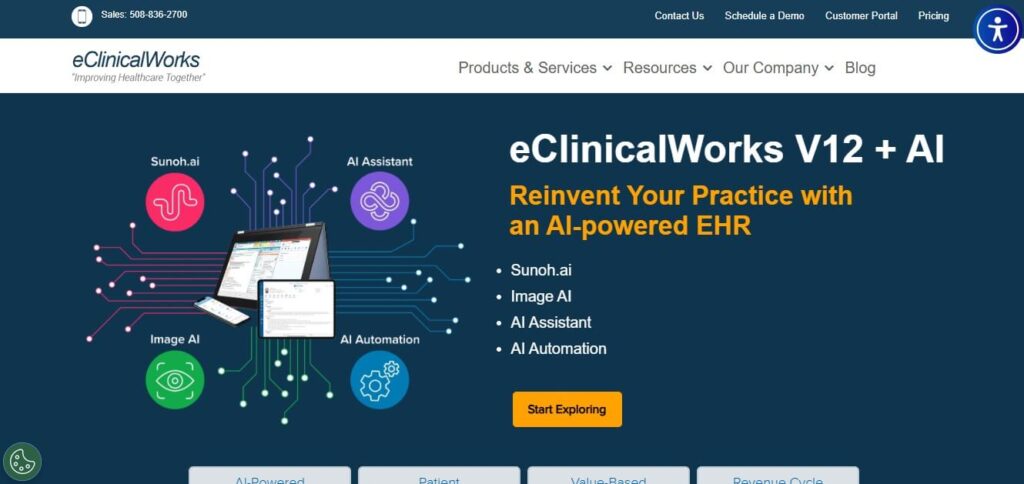
eClinicalWorks is an AI-powered medical billing software for small businesses. It has an interoperable system that interconnects billing and clinical/patient engagement systems. Its analysis applications assist in monitoring such KPIs as days in A/R and denial rates.

Advanced Features

  • Comprehensive Suite: Provides EHR, patient interaction, and billing.
  • Interoperability: Interoperable with networks, like Carequality.
  • Voice-Based Documentation: AI-assisted voice-based documentation option.
  • Population Health Management: Applicable to value-based care.

Potential Trade-offs

  • User Interface: May be cluttered for new visitors.

2. DrChrono

DrChrono is a modern, mobile-first billing system. It contains the scheduling, patient engagement, and EHR features. It has a clean interface and customizable billing workflows, with the help of which small practices reduce their errors and receive reimbursement faster.

Advanced Features

  • Mobile-First Design: Official Apple Mobility partner, it also works on iPads and iPhones.
  • Real-Time Checking of Eligibility: Minimises claim denials.
  • Workflow customisation: Dynamic to practice size.
  • Designed for 20+ Specialties.
  • Built-in Telehealth and eRx: Makes recent practice convenient.

Potential Trade-offs

  • Poor Advanced Analytics: Reporting capabilities are proficient, yet not as comprehensive as those of other competitors.
  • Response Times Support: Some customers say that they received slower customer support at certain peak times.

3. Kareo; Now Tebra

Tebra is among the most used small and single practice solutions. It is easy to use. Kareo consists of claims management, patient statements, collections tracking, and analytics dashboards.

Advanced Features

  • Cloud-Based Solution: There is no requirement for on-site servers.
  • Real-time Tracking on Claims: Easy trackers.
  • Patient-Friendly Statements: Patient communication made easy.

Potential Trade-offs

  • Limited Customisation Large Practices: It best fits small to mid-sized practices.
  • Infrequent Glitches: Users complain of technical issues with the software.

4. AdvancedMD

AdvancedMD is a powerful, scaled-out healthcare billing system that growing practices require. Its end-to-end platform includes an area of claim scrubbing, RCM services, and business intelligence tools. AdvancedMD is the best choice when you require detailed reporting and automation.

Advanced Features

  • Scalable Platform: Ideal where there are many locations in practice.
  • End-to-End RCM Tools: These include scheduling, billing, reporting, and patient engagement.
  • High Automation: Auto-reminders, claims scrubbing, and payment posting.
  • Business Intelligence Dashboard: Real-time financial insights.

Potential Trade-offs

  • Heavy Learning Curve: Time-consuming to learn since it is in-depth.
  • Price: The high price point in comparison with small-practice solutions.

5. CentralReach
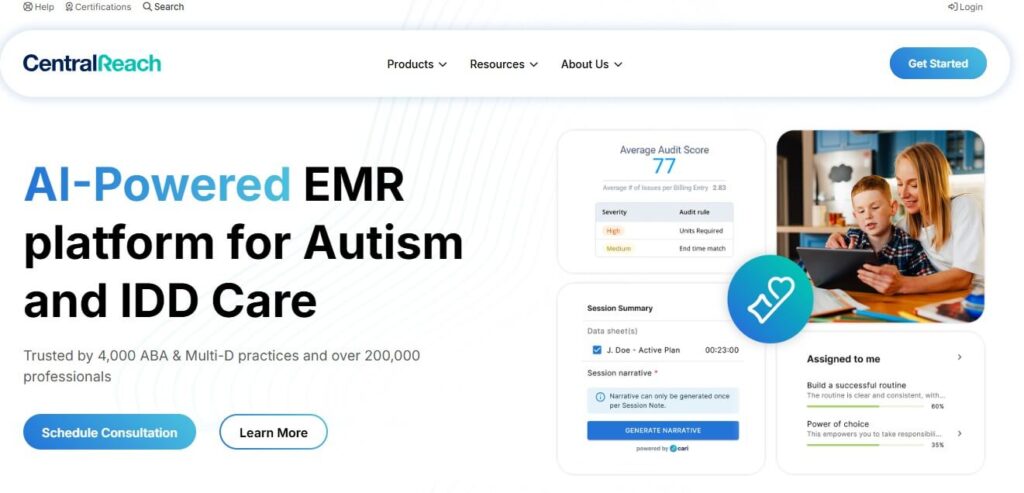
CentralReach is AI-powered, focuses on the practice management of ABA (Applied Behaviour Analysis). In the case of therapy and behavioural health clinics, their billing system will combine the scheduling, data collection, and insurance claims, ensuring the revenue cycle management is flawless.

Advanced Features

  • ABA & IDD Specialisation: This is an ABA-focused treatment for autism that is purpose-built as well.
  • End-to-End Billing: Submission of claims, scrubbing, tracking, and denial administration.
  • Clinical Documentation: Auto-graphing, custom forms, and offline data collection.
  • Analytics & Reporting: KPIs, financial performance, and utilisation.
  • Client Portal: Caregivers can look at the invoices and session history.

Potential Trade-offs

  • Increase in Cost of Scale: Price increases with employees, destinations, and extras.
  • Steep Learning Curve: It takes time to train and set up.

6. AthenaCollector (Athenahealth)

best medical billing software for small practices

AthenaCollector is famous because of its AI-powered processes that enhance the accuracy and speed of claims. It has inbuilt rules engines, real-time claim tracking, and reporting dashboards to assist small practices in increasing collections.

Advanced Features

  • Rule-Based Claim Scrubbing: Large first-pass acceptance rate.
  • Denial Management Tools: Tracks denials so that they can be reasserted successfully.
  • Built-in Patient Communication: SMS and email messages.

Potential Trade-offs

  • Personalisation Weakness: Not as flexible as competitors.
  • Revenue Sharing Model: Some practices do not like percentage-based pricing.

7. NextGen Office

The cloud solution of NextGen can be customised for numerous specialities. It consists of templates that can be customized, claim scrubbing, and integrating a patient portal. Useful when the practices require specialty-specific features and scalability.

Advanced Features

  • Specialty-focused designs: Tailored designs for many specialities.
  • Intense Interoperability: Electronic labs, pharmacies, and other EHRs.
  • Beyond Reporting and Analytics: Best in data-driven decision making.
  • Revenue Cycle Management Support: Provides outsourced billing and software
  • Designed for small to mid-sized to enterprise-level practices.

Potential Trade-offs

  • Difficult to set up: Staff must be trained on the full usage of its features.
  • Pricing Transparency: The pricing may change as per the customisation requirements.

8. CureMD

CureMD provides an all-in-one cloud-based billing system that interfaces with EHR and practice management solutions. It has an intuitive dashboard with real-time claim status, automated eligibility checking features, and denial management capabilities, which are less complicated to increase first-pass acceptance rates.

Advanced Features

  • EHR + Billing: This is an integrated practice management, EHR, and billing platform.
  • AI-Based Scrubbing of Claims: Reduces refusals and rejections.
  • Patient Portal and Payments: Patients can access and pay bills online.
  • HIPAA/ICO-10 compliant.

Potential Trade-offs

  • Learning Curve: The interface is so full of features that it might require some time to get oriented.
  • Price: Moderately high prices in contrast to other smaller competitors.

9. PracticeSuite

PracticeSuite is a low-cost and feature-packed platform that grows with your practice. It consists of scheduling appointments, claims, and payments, and custom reporting, which is the most suitable medical billing software for small businesses with a tight budget.

Advanced Features

  • End-to-End Revenue Management: Scheduling, billing, and reporting.
  • Multi-Location Support: Fits the expanding practice.
  • Customizable Templates: Specialty-specific customisation.
  • Price: Clear strategy for various sizes of practices.

Potential Trade-offs

  • Poor Advanced Analytics: Good reporting, not so powerful as NextGen or Advanced.

10. EZClaim

EZClaim is a cost-effective and user-friendly medical billing software for small practices. It serves as an ideal entry point for small practices for a healthcare billing system. Its low-end model is based on quick claims type submission, uploading of payment, and minimal reporting without excessive complexity of operations.

Advanced Features

  • Simple Interface: The simple interface is user-friendly.
  • Low Prices: Suitable for small practices and individual providers.
  • Portable Deployment: Cloud and desktop solutions at hand.

Potential Trade-offs

  • Minimal Capabilities on Large Practices: Lacks complex automation instruments.
  • Simple Reporting: Not the best suited to complex financial practices.

Dashboard & Reporting: What Small Practices Should Look For?

When evaluating medical billing software, the dashboard should give small practices a clear, real-time snapshot of their financial and operational health.

A well-designed reporting system highlights key metrics, identifies problem areas, and supports data-driven decision-making. Look for dashboards that include:

→ Claims Overview: Track submitted, denied, and paid claims at a glance.

→ Denial Analysis: Identify the most common denial reasons to quickly address recurring issues.

→ Accounts Receivable (AR) Days: Break down AR by payer and service type for more precise follow-up.

→ Patient Receivables Aging: Monitor outstanding balances across 30/60/90+ days to improve collections.

→ Revenue Insights: View revenue trends by provider, specialty, or location (if applicable).

→ Monthly & Year-to-Date Trends: Spot seasonal fluctuations and forecast future revenue.

→ Payer Mix & Performance: Compare insurers to see which delay payments or generate higher denial rates.

→ Task & Workflow Monitoring: Stay on top of unbilled services, pending claims, appeals, or bottlenecks.

→ Visual Reporting Tools: Use graphs, pie charts, color coding (green = good, red = issue), and drill-down capabilities for deeper analysis.

How to Select the Best Medical Billing Software for Small Practices?

The planned process for selecting medical billing services for small practices will allow for avoiding regrets and a successful transition. You should:

1. Be clear in your requirements:

  • Number of providers/users
  • Specialities (if any)
  • Monthly claim volume

2. Current systems (EHR/Scheduling) and integration requirements:

  • Set budget expectations
  • Upfront vs recurring fees

3. Select 2-3 solutions and make a comparison:

  • Request demo sessions
  • Inquire about dashboard previews, reporting
  • Inquire about onboarding and migrations

4. Check: How difficult is the transfer of data in the existing system?

  • Training for staff
  • Check compliance and data security
  • HIPAA (or locally/ GDPR or a regulatory health data law)
  • Encryption, audit logs, and backups

5. Pilot phase:

  • Pilot on a small scale (one provider or one location).
  • Track important indicators: denial rate, days in AR, and turn-time made on claim.

6. Measure and optimize continuously:

  • Dashboard to detect areas of problems.
  • Frequent employee and provider feedback.

Choose Convenience, Choose Health & Billing!

Or you can choose an expert medical billing services provider company, having complete knowledge and information about healthcare billing systems and medical billing software for small businesses.

Here’s what you gain when you choose Health & Billing:

Customized Solutions: Select standalone medical billing software or a complete billing service, just what your practice’s needs!

Transparent, Affordable Packages: Clear pricing designed for individual providers and small clinics, no hidden fees, no surprises for you!

Actionable Insights at Your Fingertips: Instantly track claim status, denials, AR days, and patient balances to spot delays and recover your revenue faster.

Patient-Friendly Technology: We offer online portals, automated notifications, and flexible payment plans to improve patient satisfaction and collections.

Compliance & Security Guaranteed: Stay HIPAA-compliant with secure claims submission, data protection, and reliable backups.

Seamless Transition & Ongoing Support: From onboarding to training, our responsive local support ensures you never face billing challenges alone.

With the right partner, your practice can reduce stress, speed up payments, and free more time for what matters most: your patients!

Bottom Line

One of the best choices that a small practice can make is to pick medical billing services that know about healthcare billing systems and the best medical billing software for small businesses. The right system translates to fewer refusals, quicker payments, more time to attend to patients, and eventually a healthier bottom line.

It can make sure you receive a system that not just works but makes your practice faster in terms of its financial well-being, with consideration of the features, comparisons, dashboards, pricing transparency, and support for the other strategies employed by the competitors.


29Sep

Billions Lost to Medical Billing Errors: What Every Healthcare Practice Must Know!

It’s a quiet emergency in healthcare: a mis-typed code, a misunderstood note, an insurance pre-authorization that didn’t get filed, each one a tiny glitch. But together, these glitches, or we can say, medical billing errors, cost billions every year. For patients, they mean surprise medical bills, confusion, and even debt. For clinics and hospitals, they’re losing revenue, increasing workload, and reputational risk.

Recent studies show that 4 in 5 medical bills in the U.S. contain at least minor medical billing mistakes. One survey from the Commonwealth Fund revealed that 45% of insured, working-age Americans received a bill or copayment in the past year for a service they believed should have been covered. 

The cost of sloppy billing goes far beyond statements; it hits trust, access, and the financial stability of patients and providers alike.

What Are Medical Billing Errors?

Let’s define what we’re talking about. Medical billing errors are mistakes anywhere in the process of medical billing, i.e., turning healthcare services into final bills or claims. They’re not always malicious; often, medical billing errors are accidental, caused by complexity, miscommunication, or outdated systems. But the consequences can be serious.

Common types of medical billing errors include:

  • Coding errors: Using the wrong ICD, CPT, or HCPCS codes.
  • Duplicate charges: Billing the same service more than once.
  • Insurance/coverage errors: Wrong policy data, not updating changes, and misreading benefit coverage.
  • Unbundling vs bundling mistakes: Charging separately for procedures that ought to be grouped.
  • Upcoding / Downcoding: Inflating or under-reporting the complexity of a service.
  • Missing or incorrect patient or service details: Dates, provider names, modifiers, medical necessity documentation, etc. Each of those can trigger denials, overcharges, waste, or long delays.

medical billing errors health and billing

How Much Do These Medical Billing Errors Cost?

Let’s pull in recent data so you can see how big the problem really is:

Metric Value Source
Share of medical bills with errors ~ 80% Dialog Health: “80% of medical bills contain inaccuracies”. 
Number of insured adults who got bills for what they expected to be covered 45% Commonwealth Fund, 2024 survey.
Denials for doctor-recommended services ~ 17% Same survey. Commonwealth Fund
Administrative costs of healthcare in 2023 (for “transactions” tracked by CAQH) ~$400 billion total; ~$89 billion from 9 key administrative transactions CAQH Index 2023.
Potential savings from better automation and process improvements ~$18.3 billion annually CAQH Index 2023. 

What does this mean in practice?

→ Providers lose revenue or have cash flow delayed due to denials, corrections, or re-filings.

→ Patients may overpay or owe amounts they didn’t expect.

→Insurers and payers spend large sums adjudicating incorrect claims, issuing corrections.

→ The overall system spends billions on administrative overhead that could be redirected into patient care if medical billing errors decreased.

Common Causes of Medical Billing Errors

The things that cause these errors are not mysterious; they’re often predictable, though sometimes hard to eliminate:

  1. Human error: Data entry mistakes, misread clinician notes, incorrect modifiers, and wrong patient info.
  2. Outdated or fragmented billing systems: systems that don’t sync, that aren’t updated with the latest codes, or where automation is partial.
  3. Poor communication: Between providers, coding staff, and insurance companies. When documentation is unclear, or benefit/eligibility information isn’t properly shared.
  4. Complexity and frequent change in rules: Code sets change (ICD, CPT), payer policies differ, modifier rules, bundling rules, etc. Even experienced coding/billing staff can make mistakes under pressure.
  5. Denials and appeals lag: When claims are denied and appeals are delayed, there’s a backlog and lost opportunity, repeating mistakes without feedback loops.

Case Studies

1 → A patient had imaging for a scan. Because one component was coded separately instead of being bundled properly, they were billed multiple times for essentially the same part of care. 

The result? A bill ten times higher than expected. After the appeal, many of the duplicate charges were removed, but not before causing anxiety and distrust.

2 → A midsize pediatric clinic was losing revenue for months because its coding staff used outdated modifiers. Many of their claims were denied on first submission. 

They switched to a more robust auditing process + updated coding references and saw claim acceptance increase dramatically, and revenue catch up within a quarter.

Medical Billing Errors: Consequences Beyond Dollars

Medical Billing Errors aren’t just about money. Their effects ripple outward.

  • Patients may delay or avoid care because they fear surprise bills or debt, worsening health outcomes.
  • Trust gets damaged; nobody likes being billed for something they didn’t expect or didn’t understand. Word spreads.
  • Providers pay in staff time (correcting errors, re-filing, appeals), and sometimes in reputation or even regulatory scrutiny if errors are large or systemic.
  • Insurance premiums and costs to payers may rise, which ultimately affects everyone.
  • Administrative burnout: staff who repeatedly correct denials or deal with frustrated patients are under stress.

Solutions: How to Reduce Medical Billing Errors?

Here are proven ways to reduce errors, save money, and improve satisfaction for all stakeholders.

Adopt modern billing & RCM software

Healthcare organizations should implement features such as automated eligibility checks, duplicate claim detection, code validation, and real-time payer rule integration in Revenue Cycle Management.

Continuous training and education

Continuous training is mandatory for medical coding/medical billing staff and clinicians. They should keep up with code updates, modifiers, and documentation requirements.

Routine practice audits & feedback loops

A monthly or quarterly review of denials, error sources, share lessons learned, and adjust processes.

Transparent patient billing & communication

Provide itemized bills, clear statements, advance estimates when possible, and explain what insurance is doing. Patients value clarity!

Better coordination with insurers

Your medical billing team should be trained for pre-authorizations, verifying coverage in advance, and understanding payer-specific rules.

Data-driven decision making

Track metrics like denial rate, days in accounts receivable A/R, percentage of claims corrected, etc., so you can see where your error hotspots are.

Or healthcare practices can opt for outsourcing an expert professional 100% HIPAA-Certified team to handle medical billing, avoid medical billing errors, and manage the revenue cycle management process. It will not only minimize those revenue-draining medical billing errors but also increase your patients’ satisfaction and prosper your practice!

The Role of Health & Billing!

Here’s how Health & Billing puts all of this into action, not in theory, but in real practice:

At Health & Billing, we believe that accuracy is not optional; it’s foundational. Our work helps providers plug the leaks in their revenue cycle and deliver patient-centered billing. 

Some of our ways:

  • Error-prevention tools built in: Our platform automatically flags suspicious claims before they go out; duplicate procedure codes, missing documentation, mismatches of diagnosis vs procedure.
  • Expert coding support & updates: We maintain up-to-date libraries of ICD/CPT codes, modifiers, and payer rules; our trained medical billers team can help clinicians understand how documentation affects billing.
  • Denial management & recovery: When claims are denied, we help you analyze why, build appeals, and recover revenue.
  • Patient transparency & support: We design patient statements clearly, help with estimates, and help patients understand what insurance covers and what they owe.
  • Analytics & reporting: We give you dashboards that show where your billing cycle has breakdowns: high denial rates, frequent error types, and slow payment cycles. So you can focus improvement efforts where they matter most.

Because when the revenue cycle works smoothly, fewer denials, fewer corrections, everyone wins: providers get paid faster, patients feel respected and informed, and the healthcare system moves forward…!

If your small practice, clinic, specialty-focused practice, or hospital is experiencing high rates of denied claims, medical billing errors, patient billing disputes, or revenue delays, don’t wait. Reach out to Health & Billing...

We can help you map out medical billing error hotspots, implement error-proof workflows, and build patient billing processes that are honest, efficient, and fair..!

FAQs

1. Why are medical billing errors so common?

Medical billing is incredibly complex, with thousands of codes, constant updates, and different rules for every insurance company. Add in human error from busy staff and outdated systems, and mistakes become almost inevitable. That’s why studies show up to 80% of medical bills contain inaccuracies. The good news? With better systems and staff training, most of these errors are preventable.

2. How do medical billing errors affect patients?

For patients, billing mistakes often show up as unexpected charges or denied insurance claims. Imagine going in for a simple test and getting billed for something far more complex, or finding out your insurance “denied” coverage because of a typo. 

Errors like these create stress, debt, and sadly, some patients avoid care altogether because they fear surprise bills.

3. What is the financial cost of billing errors to providers?

For providers, the cost is staggering. Every denied claim means lost revenue, delayed cash flow, and extra staff time spent fixing errors. Industry estimates show that over $125 billion is lost annually in the U.S. healthcare system because of billing mistakes. 

For many hospitals and clinics, fixing this problem could mean hiring more staff, investing in better equipment, or simply staying financially healthy.

4. How can medical practices reduce billing errors?

The most effective strategies are a mix of technology, training, and transparency:

  • Use billing software that automatically flags errors.
  • Keep billing and coding staff up to date with the latest coding rules.
  • Audit claims regularly before sending them out.
  • Provide patients with clear, itemized bills.
  • Communicate closely with insurers to verify coverage and authorizations.
    These steps may seem small, but together, they can reduce denials dramatically.

5. How does Health & Billing help with medical billing problems?

At Health & Billing, our mission is to take the stress out of medical billing. We combine advanced software with expert human oversight to:

  • We have an expert team to handle not only medical billing but the complete Revenue Cycle process, so you can focus on patient care.
  • Catch coding mistakes before claims go out.
  • Manage denials quickly to recover lost revenue.
  • Simplify patient billing so families understand what they owe and why.

The result? Fewer errors, faster payments, and happier patients!

25Sep

Healthcare Credentialing: Essential Foundation for Healthcare Excellence

healthcare credentialing

Medical credentialing is healthcare’s strongest safeguard. It’s the built-in quality control. It ensures that providers actually have the training, skills, and certifications they claim to have, which translates into patients receiving safe and competent care. 

 As healthcare evolves, with the emergence of telemedicine, virtual sites, and multi-state practices, healthcare credentialing has become more complex yet even more vital. In far too many cases, patients never meet their providers face-to-face. That makes credentialing the foremost means by which organizations confirm trust and guarantee the safety of patients and their own professional reputations. 

What Is Healthcare Credentialing? 

Healthcare credentialing is the formal process of verifying a provider’s background. This involves education, training, licensure, certifications, work history, and general professional competency.  Unlike a one-time job check, credentialing is continuous. Licenses must be tracked for renewal, certifications maintained, and disciplinary actions must be monitored. 

One of the main distinctions from normal employment verification is that credentialing involves primary source verification. Rather than taking a copy of a diploma at face value, credentialing staff call the medical school directly. The same holds true for residencies, licensing boards, and certification organizations. This additional step avoids fraud and guarantees trust in patient care. 

Why is Healthcare Credentialing Necessary? 

Credentialing is used for several reasons: 

  • Verifies that the providers’ licenses and certificates are up to date. 
  • Confirms professional references and employment history. 
  • Look for any malpractice claims or disciplinary measures. 
  • Verifies adherence to state and federal laws. 
  • Most importantly, upholds standards for high-quality care, protecting patient safety. 

Core Components of Credentialing 

Understanding the core components of healthcare credentialing is necessary. It lets you understand the process details and clarifies why it is so time-consuming: 

Primary Source Verification 

Primary source verification forms the foundation of credentialing. Credentialing professionals make direct calls to medical schools to ensure degrees. They verify residency completion with training facilities. State license boards confirm current licensure status and any restrictions. 

Direct verification prevents document forgery. It guarantees correct provider qualifications. It is time-consuming but provides the quality assurance required. 

Education and Training Evaluation 

Credentialing audits cover all in education. Medical school, residency, fellowship, and continuing education all fall under review. 

Licensure and Certification Monitoring 

Unlimited current licenses are necessary for practice. Credentialing verifies licensure status at every site of practice. Disciplinary actions or limitations are also recorded and reviewed. 

Board certifications indicate specialized expertise. These credentials include initial certification verification and requirements for ongoing maintenance. Lapsed certifications can impact practice privilege and billing capacity. 

Professional History Review 

Work history verification encompasses all previous positions. The previous employers confirm dates of employment, title occupied, and termination reason. Unexplained lapses in employment need to be queried and documented. The information helps assess provider competence and professional standing. 

The Credentialing Process: Step-by-Step Guide

1. Gather Required Documents 

What to collect: 

  • Current state license(s) and license numbers
  • Curriculum vitae (CV) with month/year dates (≥5 years preferred)
  • Medical/dental/other diplomas and residency/fellowship certificates
  • Board certification(s) (if any)
  • DEA / controlled-substance registration (if applicable)
  • Malpractice insurance declaration and claims history
  • Government ID (photo) and social security/tax info for payroll/contracting
  • NPI (National Provider Identifier) and tax documents (W-9)
  • References (professional) and employment history explanations for gaps.

2. Submit Applications

Submit the detailed applications, including all required details such as education, licenses, training, work history, and references.

3. Primary Source Verification (PSV)

The credentialing bodies verify each key item with the original source: 

  • License verified with the state licensing board
  • Education/degree verified with the issuing school or registrar
  • Board certification verified through the board registry
  • Malpractice claims/settlements checked and dates verified (via reports and insurer statements)

4. References, Background check & Fingerprinting (if required)

  • Contact professional references and previous employers. 
  • Some hospitals or states require criminal background checks and fingerprinting checks.

5. Credentialing / Privileging Committee Review

The compiled file is presented to the credentialing committee or medical staff for a decision (approve, approve with conditions, or deny). Hospitals also use privileging to authorize specific clinical procedures. Accreditation standards require a documented committee review.

6. Privileging Determination

Approved providers also have clinical privileges that are commensurate with training and experience. Privileges define exactly what they can perform in terms of procedures and treatment. Decisions are congruent with organizational capacity and patient safety requirements. 

Privilege restrictions may be implemented based on training deficiencies or facility capacity. These measures ensure patient safety while facilitating practice development. 

What is Re-credentialing? 

Credentialing isn’t a one-time event. Most organizations re-credential providers every two to three years. It is necessary to ensure continued compliance and competence. This includes updated licenses, certifications, performance reviews, and patient care quality metrics. Malpractice claims or disciplinary actions are monitored continuously in between these cycles.

Financial Impact of Credentialing 

Delays in credentialing have a severe impact on revenue. Providers cannot bill for care without credentials. One month’s delay can cost thousands of dollars per provider in lost business. Efficient processes minimize these financial losses. 

Accurate credentialing prevents billing compliance errors. Insurance claim denials due to credentialing problems create additional administrative work. Prevention by accurate credentialing saves time and money both. 

Organizations must weigh urgency against completeness in credentialing activities. It’s evident that rushing the verification process carries risks for compliance, but delaying verification too long can impact financial performance and provider satisfaction. 

Bottom Line 

Healthcare Credentialing remains fundamental to healthcare safety and quality. The process protects patients while facilitating regulatory compliance and operational efficiency. Organizations that invest in modern healthcare credentialing systems and processes position themselves for success. They reduce operational risk while improving provider satisfaction and patient safety.  

Health and Billing Professionals provide complete healthcare credentialing services for healthcare organizations throughout the United States. We manage initial credentialing, monitoring, primary source verification, and re-credentialing on a continuous basis for hospitals, medical groups, and telehealth companies. Our experienced personnel ensure regulatory compliance at a lower processing cost! 


20Sep

Medical Billing Specialist: 8 Main Duties and Responsibilities

Medical billing specialists handle and estimate the financial operations of healthcare. Their work lies at the intersection of medicine, insurance, coding, regulations, and patient services. Medical billing and coding specialists’ job has a good scope in the future. It falls within the U.S. Bureau of Labor Statistics (BLS) classification of medical records and health information technicians. The field is expected to grow by 9% from 2020 to 2030, adding approximately 37,100 new positions. 

Who is a Medical Billing Specialist? 

A Medical Billing Specialist is accountable for processing the financial aspects of healthcare services within medical facilities. Their primary role is to evaluate patient records, verify insurance information, and accurately code medical procedures using specialized systems like HCPCS,  ICD-10, and CPT codes for insurance claims.  

A Medical Billing Specialist ensures that financial transactions between healthcare providers and insurance companies are processed efficiently, ensuring a smooth revenue cycle process for medical practices. 

Medical Billing Specialist: The Work Cycle 

The billing process initializes when a patient books an appointment. Their pre-approval is requested from the insurer to determine the patient’s out-of-pocket cost. This helps to accurately determine the patient’s financial responsibility at the point of service.  

A medical biller creates invoices after medical coding of the provided services is completed and further sends claims to insurance providers. Moreover, medical billing specialist reviews, update codes, ensures compliance with regulations such as HIPAA, and, in short, they make sure everything is correct before submitting. 

Insurance companies utilize these codes to approve or deny payment requests, whereas any unpaid balance is sent to the patient.  

Once insurance payments are processed, the biller invoices the patient for outstanding amounts, tracks co-pays, and follows up on unpaid bills from both insurers and patients. If a claim remains unpaid, the biller contacts the insurance company to verify all documentation.

Medical billers also work closely with accounts receivable teams. It is to maintain cash flow and use medical billing software to track claims. Additionally, they manage documents like remittance advice (RA) and explanation of benefits (EOB) to resolve payment discrepancies. 

Put simply: they transform coded medical diagnoses and procedures into invoices, liaise with insurers and patients, track payments, and help ensure providers receive full reimbursement. 

duties of medical billing specialist
Main Duties and Responsibilities Of a Medical Biller  

Duties change depending on where they work, yet the core responsibilities remain consistent across most healthcare settings.

1. Reviewing Patient Information

Billing starts with patient information. The specialist checks for accuracy. This includes name, date of birth, insurance, and diagnosis. Any mistake can lead to claim rejection.

2. Coding Medical Procedures

Every medical service has a code. These codes are used for billing. A medical billing specialist assigns these codes. They use standard coding systems. These include CPT, ICD, and HCPCS codes. The correct code ensures the right payment.

3. Preparing Claims

Once the codes are ready, the specialist prepares the claim. This is a request for payment. The claim is sent to the insurance company. It must be clean and correct, because any error can delay payment.

4. Following Up on Claims

Not all claims are paid on time. Some are denied. Others need more information. The billing specialist follows up. They are responsible for denial management and also fix errors and resubmit the claim.

5. Managing Patient Bills

Some costs are not covered by insurance. The specialist prepares bills for patients. They send out statements. They may also set up payment plans. They help patients understand their bills.

6. Verifying Insurance

Before treatment, the medical biller checks insurance and confirms what services are covered. This helps avoid surprises later. It also speeds up the billing process.

7. Communicating with Staff

Coordination of a medical biller with doctors and nurses is required to know more details about all the needed medical services for a patient. Clear communication avoids delays. It also helps with accurate coding.

8. Staying Updated

Rules change often in healthcare as new codes are added. A good billing specialist always stays informed. They take training or attend webinars to stay updated. This helps them stay sharp and accurate. You can also take a specialized audit practice to minimize the potential of errors.

Below is a breakdown of the duties and responsibilities of a medical billing specialist. 

Phase / Task  Medical Billing Specialist: Role Description 
Front-end / Pre-service duties  Verify patient insurance eligibility; gather patient demographic info; assure authorizations/referrals are in place; estimate out-of-pocket costs (co-pays, deductibles) 
Coding review  Even if coding is handled by a separate medical coder, the billing specialist must understand ICD-10, CPT, HCPCS codes; review coding for correctness; correct miscoded entries or submit corrections when claims are rejected. 
Claim submission  Prepare and send claims to insurers (or other payers), using standardized forms (CMS-1500, UB-04, etc.), electronic billing, or via clearinghouses.  Ensure regulatory compliance (HIPAA, payer policies). 
Follow-up & Rejections  Monitor submitted claims; identify denials or rejections; research causes; correct & resubmit claims.  Handle remittance advice or explanation of benefits (EOB) documents. 
Patient billing & collections  After insurer payment, determine the patient’s portion; generate patient statements; follow up on unpaid balances; possibly set up payment plans or refer to collection if necessary. 
Record keeping & compliance  Maintain accurate records; ensure data privacy; follow legal requirements (e.g., for protected health information); stay updated with coding guidelines, insurance rules.  

Beyond daily tasks, medical billing specialists are often involved in: 

  • Reconciling accounts
  • Auditing internal billing/coding workflows
  • Training or supervising junior staff
  • Working with software: electronic health records (EHR), billing platforms, and clearinghouse tools 

Medical Billing Specialist; Training and Education 

No professional medical degree is required, and even a high school diploma is usually enough, but most employers prefer someone professionally trained, with a deep understanding of the work cycle.  

Trainees may take medical billing courses, which are available online or at community colleges. Some people also earn a certificate showing credibility in the field, which shows they understand billing systems and codes. 

Skills: A Medical Biller Must Have! 

  • Solid grasp of key coding systems, including ICD-10-CM, ICD-10-PCS, CPT, and HCPCS 
  • Strong computer skills with proficiency in medical billing software 
  • Familiarity with ethical debt collection standards and insurance regulations 
  • Effective communication abilities when working with patients and healthcare organizations 
  • Knowledge of fundamental accounting and bookkeeping principles 

Moreover, Medical billing specialists must be detail-oriented. One small error can cause big problems. They should possess strong mathematical skills to accurately analyze financial data and ensure precise billing calculations.  

Challenges in the Medical Billing Job 

The Medical Billing job is not tough, but it is challenging at some point. Billing, coding rules change often, and Insurance companies can be hard to work with. Patients may be confused, upset, or emotionally ill, so the associate must be emotionally trained, stay calm, and take these measures while handling these communications. The billing specialist must be professional at all times. 

Medical billing mistakes are costly. One wrong code can delay payment. It may even lead to legal issues. This is a job with great responsibilities, hence a capable person is required.

Medical billing specialists may work remotely or in professional office settings within hospitals, physician practices, and outpatient clinics. But staying responsible, attentive, and coordinated is essential in any setting.  

Certifications Required for Medical Billing 

Certification is Not Always Required, but it is Highly Valued… It shows that you are trained and skilled. Common certifications include: 

Certifications 

Offered By 

Certified Professional Biller (CPB) 

American Academy of Professional Coder  (AAPC) 

Certified Professional Coder + Certified Professional Biller (CPC + CPB)  American Academy of Professional Coder  (AAPC) 

Billing Coding Specialist Certification (BCSC) 

National Healthcareer Association (NHA) 

Certified Medical Reimbursement Specialist (CMRS) 

American Medical Billing Association (AMBA) 

These exams test your knowledge. You must pass to earn the title, as many reputable employers prefer certified specialists. 

Final Thoughts 

A medical billing specialist has a challenging job and has many duties with high risk. Their expertise is essential to maintaining a steady flow of revenue. It keeps healthcare facilities operating efficiently. Without their work, reimbursements would be delayed, financial operations would stall, and clinics could face serious challenges in delivering consistent patient care. 

But if you are attentive to detail, responsible, and can work with dedication, it is a well-paying job that can be done remotely as well! 


15Sep

Revenue Cycle Management (RCM) in Medical Billing: The Complete 2025 Guide

Revenue Cycle Management

Revenue Cycle Management is the backbone of a financially sustainable practice. Running a healthcare practice is more than the provision of excellent patient care. It’s about making certain that your practice remains financially healthy. Even the most successful medical teams can face challenges when reimbursements are delayed, claims are backpedaled, or billing processes are insufficient. 

These obstacles don’t just affect revenue. They can create administrative bottlenecks, staff frustration, and unnecessary stress for your patients. This is where Revenue Cycle Management (RCM) in medical billing becomes not just beneficial. But it is essential for your financial survival and growth.

revenue cycle management

What is Revenue Cycle Management (RCM) in Healthcare?

Revenue Cycle Management makes sure every service you provide is captured, billed, and reimbursed. It turns complex administrative work into a predictable and streamlined revenue flow

Revenue cycle Management in healthcare is the financial process that supports both clinical and administrative functions. Healthcare facilities use it to handle claims, payments, and revenue generation.

Traditional billing focuses mainly on claim submission and payment collection. RCM goes further. It covers the entire patient financial journey from pre-service to post-service follow-up.

The RCM process connects clinical data with administrative tasks. It simplifies billing and reduces errors. It also speeds up payments. Strong Revenue Cycle Management requires teamwork across departments.

Key stakeholders in the Revenue Cycle Management process include:

  • Financial counselors to assist patients with payment options
  • Revenue cycle analysts for monitoring performance metrics
  • Patient access teams: responsible for registration and verification
  • Clinical staff, to document services and capture charges
  • Health information management professionals: to assign medical codes
  • Medical Billing specialists, to submit and follow up on claims

It’s estimated that the U.S. healthcare industry loses up to $262 billion annually due to inefficient Revenue cycle management systems. The financial impact of effective RCM cannot be overstated.

Healthcare organizations with optimized revenue cycles typically see 15-30% improvement in collection rates. It also reduces days in accounts receivable and enhances cash flow predictability. (McKinsey Report)


The 12 Essential Steps of the Medical Billing RCM Process – Summary

  • Patient Pre-Registration: First, collect patient demographics and insurance details before the appointment. Gathering scheduled information in advance prevents issues and improves efficiency. 
  • Insurance Eligibility Verification: Confirm active coverage and benefits. Check copays and deductibles using real-time systems. 
  • Patient Check-in & Registration: Update patient information at arrival. Collect copays. Complete required forms and consents. 
  • Charge Capture: Record all billable services. All procedures and supplies provided during the visit should also be recorded. 
  • Medical Coding: Translate clinical documentation into standardized ICD-10, CPT, and HCPCS codes for billing. 
  • Claims Submission: Prepare electronic claims with supporting documentation. Send accurate claims to insurance payers. 
  • Payment Posting: Record payments from insurers and patients. Apply them to the correct accounts. 
  • Insurance Follow-up: Tracks unpaid or partially paid claims and resolves issues delaying payment. 
  • Denial Management: Analyze rejected claims. Make corrections, then resubmit or file appeals. 
  • Patient Billing: Send clear statements of patient responsibility. Provide multiple payment options. 
  • Payment Collection: Manage outstanding balances. Set up payment plans. Send accounts to collections if needed. 
  • Reporting & Analysis: Monitor KPIs and revenue metrics. Identify weak points and improve the revenue cycle.

The Complete RCM Cycle in Medical Billing

The medical billing Revenue Cycle Management has three phases. Each phase contains critical steps that support accurate revenue capture and collection.

1. Pre-Service Phase

The pre-service phase is often the most critical part of the RCM cycle. Errors at this stage can affect the entire revenue process. They may cause claim denials. They may also result in payment delays and patient dissatisfaction.

  • Patient Registration and Eligibility Verification

This step requires collecting demographic details and insurance information. It involves verifying patient identity. It also confirms insurance coverage and benefits in real time. Advanced Revenue Cycle Management systems now connect with insurance databases. They provide instant eligibility verification. This reduces the risk of coverage-related claim denials.

  • Insurance Authorization and Pre-Certification

This step ensures that proposed services are included in the patient’s insurance plan. It confirms that required prior authorizations are obtained before service. It is crucial for high-cost procedures. It is also vital for specialist referrals and advanced imaging studies. If authorization is not obtained, the claim may be denied. This can result in large write-offs.

  • Financial Counseling and Estimate Provision

Financial counselors meet patients to explain insurance benefits. They provide estimates of out-of-pocket costs. They also present payment options. This proactive approach improves patient satisfaction. It also increases the chance of collecting patient portions at the time of service.


2. Service Phase: Accurate Capture and Documentation

The service phase focuses on capturing and documenting all billable services. This ensures that providers are paid correctly for the care they deliver.

  • Clinical Documentation and Charge Capture

Clinical documentation is the basis for all billing activities. Providers must record services clearly and accurately. Modern electronic health record systems include charge capture tools. These tools create billing charges based on documented services. This reduces the risk of missed charges. It also improves billing accuracy.

  • Medical Coding

Medical coding is one of the most technical parts of the RCM process. It requires knowledge of ICD-10 diagnosis codes. It also needs an understanding of CPT procedure codes and HCPCS supply codes. Accurate coding is essential for proper claim reimbursement. Wrong codes can cause denials. They can also reduce payments or create compliance risks. Our medical billing and medical coding team at Health & Billing is fully trained and certified. This ensures accuracy and compliance with all current rules.

  • Claim Preparation and Submission

This step requires compiling all relevant information. It includes patient demographics. It includes insurance details. It includes service codes and supporting documentation. All details are formatted into claims and sent to insurance payers.


3. Post-Service Phase: Collection and Resolution

The post-service phase ensures payments are collected. It resolves issues, so it helps to capture full revenue for services provided.

  • Payment Posting and Reconciliation

Payments from insurers and patients are matched with claims and invoices. The process identifies partial payments. It records adjustments. It flags discrepancies that need follow-up.

  • Denial Management and Appeals

This step handles rejected or denied claims. It uses analysis and resolution methods. It requires knowledge of common denial reasons. It also needs corrective actions to stop future denials. Appeals are filed when needed. Organizations with advanced denial management often achieve an 83% success rate on appealed claims.

  • Patient Billing and Collections

This step manages patient financial responsibility, including deductibles, copayments, and insurance. Modern billing focuses on transparency and offers clear communication. It also provides multiple payment options for patients.


Why Expert Revenue Cycle Management Services Are Crucial for Your Practice?

Expert and professional medical billing and RCM management are mandatory if you want to maximize the revenue of your practice. If professionally done, the Revenue Cycle Management process can: 

  • Ensures timely reimbursement from insurance companies and patients. 
  • Reduces claim denials and revenue leakage. 
  • Enhances financial visibility for better business decisions. 
  • Frees up your staff to focus on patient care rather than paperwork. 
  • Keeps your practice compliant with healthcare regulations. 
  • Scales with your practice as it grows and diversifies. 
  • Streamlines claims submission for faster payment cycles. 
  • Provides actionable reporting and analytics for strategic planning. 
  • Enhances patient satisfaction with clear, transparent billing. 
  • Offers expert handling of complex insurance and reimbursement processes. 
  • Reduces the risk of audits and financial penalties. 
  • Optimizes revenue flow across multiple specialties and services. 
  • Supports data-driven decisions with real-time financial insights. 

At Health & Billing, our 100% HIPAA-Compliant experts professionally optimize each stage of your revenue cycle, so your practice thrives financially without compromising care quality. 


Measuring RCM Success: Key Performance Indicators

Tracking the right KPIs of Revenue Cycle Management shows financial performance. It reduces revenue loss, thus improving patient satisfaction.

→ Days in A/R
Average time to collect payments. Benchmark is 30 to 50 days. Faster collections mean stronger cash flow.

→ Clean Claim Rate (CCR)
Percentage of claims submitted without errors. The industry standard is around 98%. High CCR reduces denials and speeds reimbursements.

→ Denial Rate
Percentage of rejected claims. AAPF suggests that the target is 5 to 10 percent or lower. Lower denials prevent revenue loss and reduce workload.

→ Net Collection Rate (NCR)
Percentage of expected revenue collected. The goal is 95% or higher. High NCR ensures maximum revenue capture.

→ Patient Satisfaction
Billing experience feedback from patients. Clear and smooth billing builds trust and loyalty.

→ Bad Debt Rate
Revenue lost due to unpaid balances. Lower bad debt protects profitability.

→ Cost to Collect
Expenses needed to collect each dollar. Efficient RCM  reduces cost and raises net revenue. At Health & Billing, we help practices track and improve these KPIs. From reducing denials to increasing clean claim rates, we make sure your revenue cycle performs at its best.


Medical Billing Service in Florida

Our Revenue Cycle Management Services

In-House Management

In-house Revenue Cycle Management gives direct control over processes. Staff are immediately accessible. Clinical operations may integrate better. Practices with large volumes may find this more cost-effective.

Outsourced RCM Services

Outsourced Revenue Cycle Management provides expert staff and advanced technology. It delivers cost advantages that smaller practices cannot achieve alone. Service providers usually offer complete solutions. These include patient access, coding, billing, denial management, and analytics. Outsourcing is useful for smaller practices or those without RCM expertise.

Hybrid Models

Hybrid models mix internal and external resources. For example, patient access may stay in-house. Coding and billing may be outsourced. This allows customization based on practice needs. At Health & Billing, we offer complete medical billing and RCM management. 

Our specialty-focused approach strengthens every stage of the revenue cycle management and medical billing services in Florida and other states of the U.S. This helps practices thrive while maintaining quality care.


RCM Challenges and Solutions in Modern Healthcare

Key Challenges in the RCM Process 

 →  Incomplete or inaccurate patient information at registration can lead to claim rejections down the line. 

 →  Insurance verification delays slow down eligibility confirmation and cause payment disruptions. 

 →  Coding backlogs and errors increase the risk of denials and compliance issues. 

 →  Claim submission mistakes, from missing documentation to formatting errors, can delay reimbursements. 

 →  Patient collections difficulties, especially as patients shoulder more out-of-pocket costs, can negatively impact cash flow. 

Each of these bottlenecks chips away at both revenue and efficiency, making it critical for practices to take a proactive, systematic approach. 

Innovative Solutions to Drive Successful RCM Process!

Technology-driven tools: Artificial intelligence (AI) and machine learning (ML) can now predict claim denials, improve coding accuracy, and help prioritize collections. 

Robotic process automation (RPA): Tasks like eligibility checks, payment posting, and claim tracking can be automated, reducing errors and freeing staff to focus on higher-value work. 

Compliance readiness: With healthcare policies and payer requirements constantly evolving, staying compliant is vital. Ongoing training, audits, and policy monitoring help minimize risks. 

Patient-focused billing: As patients take on more financial responsibility, practices must improve transparency and convenience.  

Offering digital payment options, clear statements, and compassionate communication enhances patient satisfaction while improving collections. 

Outsourcing expert, professional Revenue Cycle Management Services: By combining expert Revenue CcM management with modern technology and patient-centered strategies, practices can not only resolve current challenges but also build a stronger, more resilient revenue cycle. 

At Health & Billing, we help healthcare practices of all sizes implement these solutions. We ensure smoother workflows, fewer denials, and more consistent revenue. 

Bottom Line

Revenue Cycle Management in medical billing is a full strategy. It covers every step from the first patient visit to final payment. Practices that improve or outsource RCM gain stronger financial results. They also achieve smoother operations and higher patient satisfaction. 

Revenue cycle management is not just about collecting money. It builds accurate and efficient systems. It protects revenue. It reduces costs. It ensures compliance. Best practices and modern tools are essential for success. 

At Health & Billing, we partner with practices of every size. We cut denial and increase your collections. We maximize revenue while keeping the patient experience seamless.


FAQs

What does RCM stand for in medical billing?

RCM stands for Revenue Cycle Management in medical billing. It represents the comprehensive process associated with claims processing, payment collection, and revenue generation from patient registration through final payment.


How long does the RCM process take?

The complete Revenue cycle management process typically takes 15-120 days from service delivery to final payment collection, depending on factors such as:

  • Insurance payer processing times (usually 14-30 days)
  • Claim complexity and accuracy
  • Prior authorization requirements
  • Patient payment collection timeframes
  • Any necessary appeals or corrections

What is the difference between medical billing and RCM?

Medical billing is a component of RCM that focuses specifically on claim submission and payment collection. 

RCM is the broader process that includes:

  • Pre-service activities (registration, eligibility verification)
  • Clinical documentation and coding
  • Medical billing and claims management
  • Payment posting and reconciliation
  • Denial management and appeals
  • Patient financial counseling and collections
  • Performance analytics and reporting

How can I improve my practice’s Revenue Cycle Management performance?

Key improvement strategies include:

  • Implement real-time eligibility verification
  • Train staff on proper documentation and coding
  • Establish clear financial policies and patient communication
  • Monitor KPIs regularly (days in A/R, denial rates, collection rates)
  • Invest in automation technology for routine tasks
  • Develop robust denial management processes
  • Consider outsourcing specialized functions if lacking expertise

What is the ROI of investing in RCM improvements?

Organizations typically see ROI within 12-18 months through:

  • Increased collections: 15-30% improvement in collection rates
  • Reduced costs: 20-40% reduction in billing operational costs
  • Faster payments: 25-50% reduction in days in A/R
  • Fewer denials: 30-60% reduction in claim denial rates
  • Improved compliance: Reduced risk of audits and penalties
  • Better patient satisfaction: Enhanced financial experience


09Sep

What Is Medical Billing? A 2025 Beginner’s Guide for Providers

In 2025, healthcare providers are under increased pressure to maintain a balance between financial well-being and the provision of the best services to their patients. Medical billing is a process that has a direct influence on the provider’s ability to make a consistent income.

Medical billing, when done correctly, will guarantee improved payment speed, reduced denials, and enhanced financial stability. When improperly done, it might lead to missed revenue, compliance issues, and loss of patient trust.

For organizations seeking to strengthen performance, compliance, and resilience, a clear understanding of what medical billing is and why it matters so much for revenue is now essential to long-term success.

What is Medical Billing?

Medical billing is the standardized process used to convert providers’ healthcare services into billable claims. Including collecting proper payment from health plans and patients.

These are the main tasks involved in medical billing:

  • Collect patient demographic and insurance information
  • Verify insurance eligibility and benefits
  • Obtain pre-authorizations or referrals when required
  • Review and organize provider documentation
  • Assign appropriate medical codes (ICD-10, CPT, HCPCS)
  • Enter charges into the billing system
  • Prepare and submit claims electronically or on paper
  • Track claim status and follow up with payers
  • Post payments from insurers and patients
  • Identify and resolve denied or rejected claims
  • File appeals for underpaid or denied claims
  • Generate and send patient statements
  • Manage patient billing questions and payment plans
  • Handle collections for unpaid balances
  • Maintain compliance with HIPAA and payer regulations
  • Produce financial and performance reports

In short, it’s the financial backbone that translates care episodes into cash flow. While meeting payer and regulatory rules (e.g., HIPAA transaction standards).

Medical Coding: The Language of Healthcare Finance

Medical billing relies on medical coding. Coding involves the administration of standard code sets to encode clinical documentation of a provider into a common language. These codes make sure that the services are interpreted in the same manner by the insurers, the government payers, and the healthcare organizations. 

That is to say, medical coding is the accurate, standardized data required by billing departments to produce correct claims, be reimbursed correctly, and remain compliant.

Universal medical code sets that communicate the diagnoses, procedures, and supplies. There are three major code sets in the coding process. 

1. Current Procedural Terminology (CPT) Codes

Codes are the descriptions of medical procedures and services that are offered by medical professionals. The American Medical Association maintains CPT codes. They are commonly revised annually to incorporate the changes in medical practice and technology.

2. International Classification of Diseases (ICD-10) Codes

The codes are used to determine diagnoses, symptoms, and medical conditions. The codes of ICD-10 give an elaborate account of a patient’s health status. They are basically applied to give justification to the medical necessity of procedures and treatments.

3. Healthcare Common Procedure Coding System (HCPCS) Codes

HCPCS codes include services, procedures, and supplies not found in CPT codes. Examples include: ambulance, durable medical equipment, and some medications.

Accurate medical coding underpins medical necessity, pricing, and payer adjudication. Using current code sets and official guidelines is a baseline compliance requirement.

The Strategic Purpose of Medical Billing in Healthcare Operations

In healthcare organizations, medical billing has several important functions that go much beyond the mere processing of payments:

Revenue Optimization

Medical billing optimizes revenue collection by submitting correct claims, reducing claim denials, and pursuing unclaimed claims. 

When the healthcare organization outsources its medical billing and Revenue Cycle Management systems to professional medical billing service providers, they are reported to experience an increase of 15-25% in total revenue collections. This is how important a well-implemented medical billing process is!

Regulatory Compliance

Healthcare organizations have to adhere to a set of rules, including HIPAA, Medicare rules, and state insurance requirements. These compliance requirements should be implemented in medical billing processes to help organizations avoid legal and financial fines.

Financial Planning and Analysis

Medical billing data is viewed as a quite useful source of information about the pattern of revenue, performance of the payers, and the use of services. This data aids in the process of strategic decision-making and financial planning.

Patient Financial Management

Clear statements, flexible payment options, and support with financial responsibilities help practices maintain good relationships with patients. The proper medical billing also makes sure that the payments are collected efficiently. A smooth billing process can make the patient experience less stressful and more transparent.

Administrative complexity in U.S. healthcare is significant; the 2023 CAQH Index found $89B in spending on tracked administrative transactions, with $18.3B still achievable in savings through better medical billing services and Revenue Cycle Management.


Types of Medical Billing Models: Customized Solutions for Every Healthcare Setting

Healthcare organizations handle medical billing in different ways. It depends on the size of the healthcare practice, specialty, and operational needs. 

Internal/In-House Medical Billing

Many healthcare providers choose to manage billing in-house with certified medical billers and coders. This setup gives full control over the billing process and immediate access to staff for any questions or issues. 

Internal billing works best for larger organizations. But it also comes with the challenges in hiring & retention. Practices can also lose good revenue due to missed information if staff are not certified or trained correctly. 

In-house medical billing increases the responsibility for compliance, audits, and denials.

Outsourced Medical Billing Services

Every size of healthcare practice, including specialty-focused providers, often relies on outsourced billing to streamline revenue cycle management and maximize reimbursements. 

Outsourcing expert medical billing service company in the U.S, access to experienced billing professionals, advanced technology, and specialized knowledge without the costs of an in-house team. 

Health & Billing specializes in helping organizations leverage outsourced services while maintaining high-level accuracy and 100% HIPAA-compliant billing.

Hybrid Medical Billing Service

There are practices that favor a combination of both in-house and outsourced billing. 

Health & Billing favors these hybrid models, where there is seamless integration between in-house teams and outsourced services.

Specialty-Specific Billing

Each medical specialty has unique billing requirements. Oncology billing, for example, demands expertise in chemotherapy coding and prior authorizations, while surgical billing requires detailed procedure coding and modifier application. 

At Health & Billing, we provide specialty-focused billing support tailored to your specialty. Our expert team help you maximize revenue while staying compliant.

The Process of Medical Billing (Step-by-Step)

{"type":"elementor","siteurl":"https://healthandbilling.com/wp-json/","elements":[{"id":"903b684","elType":"widget","isInner":false,"isLocked":false,"settings":{"image":{"url":"https://healthandbilling.com/wp-content/uploads/2025/09/124061.jpg","id":13039,"alt":"","source":"library","size":""},"animation_delay":"0","el_class":"img-fluid","wrap_el_class":"content-6-img right-column","wrap_el_classes":"content-6-img pl-0","_padding":{"unit":"px","top":"0","right":"0","bottom":"0","left":"0","isLinked":true},"thumbnail_custom_dimension":{"width":"500","height":"1000"},"image_alt_text":"","thumbnail_size":"large","image_rounded_cornors":"","image_alignment":"","image_alignment_tablet":"","image_alignment_mobile":"","link":{"url":"","is_external":"","nofollow":"","custom_attributes":""},"animation":"","el_classes":"","_title":"","_margin":{"unit":"px","top":"","right":"","bottom":"","left":"","isLinked":true},"_margin_tablet":{"unit":"px","top":"","right":"","bottom":"","left":"","isLinked":true},"_margin_mobile":{"unit":"px","top":"","right":"","bottom":"","left":"","isLinked":true},"_padding_tablet":{"unit":"px","top":"","right":"","bottom":"","left":"","isLinked":true},"_padding_mobile":{"unit":"px","top":"","right":"","bottom":"","left":"","isLinked":true},"_element_width":"","_element_width_tablet":"","_element_width_mobile":"","_element_custom_width":{"unit":"%","size":"","sizes":[]},"_element_custom_width_tablet":{"unit":"px","size":"","sizes":[]},"_element_custom_width_mobile":{"unit":"px","size":"","sizes":[]},"_grid_column":"","_grid_column_tablet":"","_grid_column_mobile":"","_grid_column_custom":"","_grid_column_custom_tablet":"","_grid_column_custom_mobile":"","_grid_row":"","_grid_row_tablet":"","_grid_row_mobile":"","_grid_row_custom":"","_grid_row_custom_tablet":"","_grid_row_custom_mobile":"","_flex_align_self":"","_flex_align_self_tablet":"","_flex_align_self_mobile":"","_flex_order":"","_flex_order_tablet":"","_flex_order_mobile":"","_flex_order_custom":"","_flex_order_custom_tablet":"","_flex_order_custom_mobile":"","_flex_size":"","_flex_size_tablet":"","_flex_size_mobile":"","_flex_grow":1,"_flex_grow_tablet":"","_flex_grow_mobile":"","_flex_shrink":1,"_flex_shrink_tablet":"","_flex_shrink_mobile":"","_element_vertical_align":"","_element_vertical_align_tablet":"","_element_vertical_align_mobile":"","_position":"","_offset_orientation_h":"start","_offset_x":{"unit":"px","size":0,"sizes":[]},"_offset_x_tablet":{"unit":"px","size":"","sizes":[]},"_offset_x_mobile":{"unit":"px","size":"","sizes":[]},"_offset_x_end":{"unit":"px","size":0,"sizes":[]},"_offset_x_end_tablet":{"unit":"px","size":"","sizes":[]},"_offset_x_end_mobile":{"unit":"px","size":"","sizes":[]},"_offset_orientation_v":"start","_offset_y":{"unit":"px","size":0,"sizes":[]},"_offset_y_tablet":{"unit":"px","size":"","sizes":[]},"_offset_y_mobile":{"unit":"px","size":"","sizes":[]},"_offset_y_end":{"unit":"px","size":0,"sizes":[]},"_offset_y_end_tablet":{"unit":"px","size":"","sizes":[]},"_offset_y_end_mobile":{"unit":"px","size":"","sizes":[]},"_z_index":"","_z_index_tablet":"","_z_index_mobile":"","_element_id":"","_css_classes":"","_element_cache":"","_animation":"","_animation_tablet":"","_animation_mobile":"","animation_duration":"","_animation_delay":"","_transform_rotate_popover":"","_transform_rotateZ_effect":{"unit":"px","size":"","sizes":[]},"_transform_rotateZ_effect_tablet":{"unit":"deg","size":"","sizes":[]},"_transform_rotateZ_effect_mobile":{"unit":"deg","size":"","sizes":[]},"_transform_rotate_3d":"","_transform_rotateX_effect":{"unit":"px","size":"","sizes":[]},"_transform_rotateX_effect_tablet":{"unit":"deg","size":"","sizes":[]},"_transform_rotateX_effect_mobile":{"unit":"deg","size":"","sizes":[]},"_transform_rotateY_effect":{"unit":"px","size":"","sizes":[]},"_transform_rotateY_effect_tablet":{"unit":"deg","size":"","sizes":[]},"_transform_rotateY_effect_mobile":{"unit":"deg","size":"","sizes":[]},"_transform_perspective_effect":{"unit":"px","size":"","sizes":[]},"_transform_perspective_effect_tablet":{"unit":"px","size":"","sizes":[]},"_transform_perspective_effect_mobile":{"unit":"px","size":"","sizes":[]},"_transform_translate_popover":"","_transform_translateX_effect":{"unit":"px","size":"","sizes":[]},"_transform_translateX_effect_tablet":{"unit":"px","size":"","sizes":[]},"_transform_translateX_effect_mobile":{"unit":"px","size":"","sizes":[]},"_transform_translateY_effect":{"unit":"px","size":"","sizes":[]},"_transform_translateY_effect_tablet":{"unit":"px","size":"","sizes":[]},"_transform_translateY_effect_mobile":{"unit":"px","size":"","sizes":[]},"_transform_scale_popover":"","_transform_keep_proportions":"yes","_transform_scale_effect":{"unit":"px","size":"","sizes":[]},"_transform_scale_effect_tablet":{"unit":"px","size":"","sizes":[]},"_transform_scale_effect_mobile":{"unit":"px","size":"","sizes":[]},"_transform_scaleX_effect":{"unit":"px","size":"","sizes":[]},"_transform_scaleX_effect_tablet":{"unit":"px","size":"","sizes":[]},"_transform_scaleX_effect_mobile":{"unit":"px","size":"","sizes":[]},"_transform_scaleY_effect":{"unit":"px","size":"","sizes":[]},"_transform_scaleY_effect_tablet":{"unit":"px","size":"","sizes":[]},"_transform_scaleY_effect_mobile":{"unit":"px","size":"","sizes":[]},"_transform_skew_popover":"","_transform_skewX_effect":{"unit":"px","size":"","sizes":[]},"_transform_skewX_effect_tablet":{"unit":"deg","size":"","sizes":[]},"_transform_skewX_effect_mobile":{"unit":"deg","size":"","sizes":[]},"_transform_skewY_effect":{"unit":"px","size":"","sizes":[]},"_transform_skewY_effect_tablet":{"unit":"deg","size":"","sizes":[]},"_transform_skewY_effect_mobile":{"unit":"deg","size":"","sizes":[]},"_transform_flipX_effect":"","_transform_flipY_effect":"","_transform_rotate_popover_hover":"","_transform_rotateZ_effect_hover":{"unit":"px","size":"","sizes":[]},"_transform_rotateZ_effect_hover_tablet":{"unit":"deg","size":"","sizes":[]},"_transform_rotateZ_effect_hover_mobile":{"unit":"deg","size":"","sizes":[]},"_transform_rotate_3d_hover":"","_transform_rotateX_effect_hover":{"unit":"px","size":"","sizes":[]},"_transform_rotateX_effect_hover_tablet":{"unit":"deg","size":"","sizes":[]},"_transform_rotateX_effect_hover_mobile":{"unit":"deg","size":"","sizes":[]},"_transform_rotateY_effect_hover":{"unit":"px","size":"","sizes":[]},"_transform_rotateY_effect_hover_tablet":{"unit":"deg","size":"","sizes":[]},"_transform_rotateY_effect_hover_mobile":{"unit":"deg","size":"","sizes":[]},"_transform_perspective_effect_hover":{"unit":"px","size":"","sizes":[]},"_transform_perspective_effect_hover_tablet":{"unit":"px","size":"","sizes":[]},"_transform_perspective_effect_hover_mobile":{"unit":"px","size":"","sizes":[]},"_transform_translate_popover_hover":"","_transform_translateX_effect_hover":{"unit":"px","size":"","sizes":[]},"_transform_translateX_effect_hover_tablet":{"unit":"px","size":"","sizes":[]},"_transform_translateX_effect_hover_mobile":{"unit":"px","size":"","sizes":[]},"_transform_translateY_effect_hover":{"unit":"px","size":"","sizes":[]},"_transform_translateY_effect_hover_tablet":{"unit":"px","size":"","sizes":[]},"_transform_translateY_effect_hover_mobile":{"unit":"px","size":"","sizes":[]},"_transform_scale_popover_hover":"","_transform_keep_proportions_hover":"yes","_transform_scale_effect_hover":{"unit":"px","size":"","sizes":[]},"_transform_scale_effect_hover_tablet":{"unit":"px","size":"","sizes":[]},"_transform_scale_effect_hover_mobile":{"unit":"px","size":"","sizes":[]},"_transform_scaleX_effect_hover":{"unit":"px","size":"","sizes":[]},"_transform_scaleX_effect_hover_tablet":{"unit":"px","size":"","sizes":[]},"_transform_scaleX_effect_hover_mobile":{"unit":"px","size":"","sizes":[]},"_transform_scaleY_effect_hover":{"unit":"px","size":"","sizes":[]},"_transform_scaleY_effect_hover_tablet":{"unit":"px","size":"","sizes":[]},"_transform_scaleY_effect_hover_mobile":{"unit":"px","size":"","sizes":[]},"_transform_skew_popover_hover":"","_transform_skewX_effect_hover":{"unit":"px","size":"","sizes":[]},"_transform_skewX_effect_hover_tablet":{"unit":"deg","size":"","sizes":[]},"_transform_skewX_effect_hover_mobile":{"unit":"deg","size":"","sizes":[]},"_transform_skewY_effect_hover":{"unit":"px","size":"","sizes":[]},"_transform_skewY_effect_hover_tablet":{"unit":"deg","size":"","sizes":[]},"_transform_skewY_effect_hover_mobile":{"unit":"deg","size":"","sizes":[]},"_transform_flipX_effect_hover":"","_transform_flipY_effect_hover":"","_transform_transition_hover":{"unit":"px","size":"","sizes":[]},"motion_fx_transform_x_anchor_point":"","motion_fx_transform_x_anchor_point_tablet":"","motion_fx_transform_x_anchor_point_mobile":"","motion_fx_transform_y_anchor_point":"","motion_fx_transform_y_anchor_point_tablet":"","motion_fx_transform_y_anchor_point_mobile":"","_background_background":"","_background_color":"","_background_color_stop":{"unit":"%","size":0,"sizes":[]},"_background_color_stop_tablet":{"unit":"%"},"_background_color_stop_mobile":{"unit":"%"},"_background_color_b":"#f2295b","_background_color_b_stop":{"unit":"%","size":100,"sizes":[]},"_background_color_b_stop_tablet":{"unit":"%"},"_background_color_b_stop_mobile":{"unit":"%"},"_background_gradient_type":"linear","_background_gradient_angle":{"unit":"deg","size":180,"sizes":[]},"_background_gradient_angle_tablet":{"unit":"deg"},"_background_gradient_angle_mobile":{"unit":"deg"},"_background_gradient_position":"center center","_background_gradient_position_tablet":"","_background_gradient_position_mobile":"","_background_image":{"url":"","id":"","size":""},"_background_image_tablet":{"url":"","id":"","size":""},"_background_image_mobile":{"url":"","id":"","size":""},"_background_position":"","_background_position_tablet":"","_background_position_mobile":"","_background_xpos":{"unit":"px","size":0,"sizes":[]},"_background_xpos_tablet":{"unit":"px","size":0,"sizes":[]},"_background_xpos_mobile":{"unit":"px","size":0,"sizes":[]},"_background_ypos":{"unit":"px","size":0,"sizes":[]},"_background_ypos_tablet":{"unit":"px","size":0,"sizes":[]},"_background_ypos_mobile":{"unit":"px","size":0,"sizes":[]},"_background_attachment":"","_background_repeat":"","_background_repeat_tablet":"","_background_repeat_mobile":"","_background_size":"","_background_size_tablet":"","_background_size_mobile":"","_background_bg_width":{"unit":"%","size":100,"sizes":[]},"_background_bg_width_tablet":{"unit":"px","size":"","sizes":[]},"_background_bg_width_mobile":{"unit":"px","size":"","sizes":[]},"_background_video_link":"","_background_video_start":"","_background_video_end":"","_background_play_once":"","_background_play_on_mobile":"","_background_privacy_mode":"","_background_video_fallback":{"url":"","id":"","size":""},"_background_slideshow_gallery":[],"_background_slideshow_loop":"yes","_background_slideshow_slide_duration":5000,"_background_slideshow_slide_transition":"fade","_background_slideshow_transition_duration":500,"_background_slideshow_background_size":"","_background_slideshow_background_size_tablet":"","_background_slideshow_background_size_mobile":"","_background_slideshow_background_position":"","_background_slideshow_background_position_tablet":"","_background_slideshow_background_position_mobile":"","_background_slideshow_lazyload":"","_background_slideshow_ken_burns":"","_background_slideshow_ken_burns_zoom_direction":"in","_background_hover_background":"","_background_hover_color":"","_background_hover_color_stop":{"unit":"%","size":0,"sizes":[]},"_background_hover_color_stop_tablet":{"unit":"%"},"_background_hover_color_stop_mobile":{"unit":"%"},"_background_hover_color_b":"#f2295b","_background_hover_color_b_stop":{"unit":"%","size":100,"sizes":[]},"_background_hover_color_b_stop_tablet":{"unit":"%"},"_background_hover_color_b_stop_mobile":{"unit":"%"},"_background_hover_gradient_type":"linear","_background_hover_gradient_angle":{"unit":"deg","size":180,"sizes":[]},"_background_hover_gradient_angle_tablet":{"unit":"deg"},"_background_hover_gradient_angle_mobile":{"unit":"deg"},"_background_hover_gradient_position":"center center","_background_hover_gradient_position_tablet":"","_background_hover_gradient_position_mobile":"","_background_hover_image":{"url":"","id":"","size":""},"_background_hover_image_tablet":{"url":"","id":"","size":""},"_background_hover_image_mobile":{"url":"","id":"","size":""},"_background_hover_position":"","_background_hover_position_tablet":"","_background_hover_position_mobile":"","_background_hover_xpos":{"unit":"px","size":0,"sizes":[]},"_background_hover_xpos_tablet":{"unit":"px","size":0,"sizes":[]},"_background_hover_xpos_mobile":{"unit":"px","size":0,"sizes":[]},"_background_hover_ypos":{"unit":"px","size":0,"sizes":[]},"_background_hover_ypos_tablet":{"unit":"px","size":0,"sizes":[]},"_background_hover_ypos_mobile":{"unit":"px","size":0,"sizes":[]},"_background_hover_attachment":"","_background_hover_repeat":"","_background_hover_repeat_tablet":"","_background_hover_repeat_mobile":"","_background_hover_size":"","_background_hover_size_tablet":"","_background_hover_size_mobile":"","_background_hover_bg_width":{"unit":"%","size":100,"sizes":[]},"_background_hover_bg_width_tablet":{"unit":"px","size":"","sizes":[]},"_background_hover_bg_width_mobile":{"unit":"px","size":"","sizes":[]},"_background_hover_video_link":"","_background_hover_video_start":"","_background_hover_video_end":"","_background_hover_play_once":"","_background_hover_play_on_mobile":"","_background_hover_privacy_mode":"","_background_hover_video_fallback":{"url":"","id":"","size":""},"_background_hover_slideshow_gallery":[],"_background_hover_slideshow_loop":"yes","_background_hover_slideshow_slide_duration":5000,"_background_hover_slideshow_slide_transition":"fade","_background_hover_slideshow_transition_duration":500,"_background_hover_slideshow_background_size":"","_background_hover_slideshow_background_size_tablet":"","_background_hover_slideshow_background_size_mobile":"","_background_hover_slideshow_background_position":"","_background_hover_slideshow_background_position_tablet":"","_background_hover_slideshow_background_position_mobile":"","_background_hover_slideshow_lazyload":"","_background_hover_slideshow_ken_burns":"","_background_hover_slideshow_ken_burns_zoom_direction":"in","_background_hover_transition":{"unit":"px","size":"","sizes":[]},"_border_border":"","_border_width":{"unit":"px","top":"","right":"","bottom":"","left":"","isLinked":true},"_border_width_tablet":{"unit":"px","top":"","right":"","bottom":"","left":"","isLinked":true},"_border_width_mobile":{"unit":"px","top":"","right":"","bottom":"","left":"","isLinked":true},"_border_color":"","_border_radius":{"unit":"px","top":"","right":"","bottom":"","left":"","isLinked":true},"_border_radius_tablet":{"unit":"px","top":"","right":"","bottom":"","left":"","isLinked":true},"_border_radius_mobile":{"unit":"px","top":"","right":"","bottom":"","left":"","isLinked":true},"_box_shadow_box_shadow_type":"","_box_shadow_box_shadow":{"horizontal":0,"vertical":0,"blur":10,"spread":0,"color":"rgba(0,0,0,0.5)"},"_box_shadow_box_shadow_position":" ","_border_hover_border":"","_border_hover_width":{"unit":"px","top":"","right":"","bottom":"","left":"","isLinked":true},"_border_hover_width_tablet":{"unit":"px","top":"","right":"","bottom":"","left":"","isLinked":true},"_border_hover_width_mobile":{"unit":"px","top":"","right":"","bottom":"","left":"","isLinked":true},"_border_hover_color":"","_border_radius_hover":{"unit":"px","top":"","right":"","bottom":"","left":"","isLinked":true},"_border_radius_hover_tablet":{"unit":"px","top":"","right":"","bottom":"","left":"","isLinked":true},"_border_radius_hover_mobile":{"unit":"px","top":"","right":"","bottom":"","left":"","isLinked":true},"_box_shadow_hover_box_shadow_type":"","_box_shadow_hover_box_shadow":{"horizontal":0,"vertical":0,"blur":10,"spread":0,"color":"rgba(0,0,0,0.5)"},"_box_shadow_hover_box_shadow_position":" ","_border_hover_transition":{"unit":"px","size":"","sizes":[]},"_mask_switch":"","_mask_shape":"circle","_mask_image":{"url":"","id":"","size":""},"_mask_image_tablet":{"url":"","id":"","size":""},"_mask_image_mobile":{"url":"","id":"","size":""},"_mask_notice":"","_mask_size":"contain","_mask_size_tablet":"","_mask_size_mobile":"","_mask_size_scale":{"unit":"%","size":100,"sizes":[]},"_mask_size_scale_tablet":{"unit":"px","size":"","sizes":[]},"_mask_size_scale_mobile":{"unit":"px","size":"","sizes":[]},"_mask_position":"center center","_mask_position_tablet":"","_mask_position_mobile":"","_mask_position_x":{"unit":"%","size":0,"sizes":[]},"_mask_position_x_tablet":{"unit":"px","size":"","sizes":[]},"_mask_position_x_mobile":{"unit":"px","size":"","sizes":[]},"_mask_position_y":{"unit":"%","size":0,"sizes":[]},"_mask_position_y_tablet":{"unit":"px","size":"","sizes":[]},"_mask_position_y_mobile":{"unit":"px","size":"","sizes":[]},"_mask_repeat":"no-repeat","_mask_repeat_tablet":"","_mask_repeat_mobile":"","hide_desktop":"","hide_tablet":"","hide_mobile":""},"defaultEditSettings":{"defaultEditRoute":"content"},"elements":[],"widgetType":"powernode-image","htmlCache":"\t\t\n\t\t\t\t\t\r\n\t\t\t\t\t\n\t\t","editSettings":{"defaultEditRoute":"content","panel":{"activeTab":"content","activeSection":"section_image"}}}]}

The medical billing process, or “The Revenue Cycle,” involves several steps that are closely related to each other and convert healthcare services into revenue collected:

In healthcare, “billing” is far more complex than simply sending an invoice. It is a structured, multi-step process. The medical billing process ensures that the healthcare providers are accurately compensated. In this process, they have to keep the patients informed about their financial responsibilities. 

Effective medical billing supports the financial stability of a practice, while errors can lead to claim denials, delayed payments, or revenue loss.

The medical billing process can be broken down into several essential steps:

Step 1: Patient Registration

Patient registration is the foundation of the billing process. During registration, billers collect essential information, including:

  • Patient identification details (name, date of birth, contact information)
  • Insurance information (policy number, payer details)
  • Reason for the visit or referral

Accurate data collection at this stage is critical. Any errors due to an inexperienced team can be a primary cause of claim denials.

Step 2: Insurance Verification & Authorization

Before services are rendered, the billing team verifies insurance coverage. They verify:

  • Is the patient’s coverage active?
  • What are their benefits? (What services are covered?)
  • What is their deductible, and have they met it?
  • What is their copay or coinsurance amount?

They are responsible for confirming whether pre-authorization/retro-authorization is required for specific procedures. 

This step ensures that patients are aware of potential out-of-pocket costs and helps prevent claim denials due to coverage issues.

Step 3: Medical Coding

After the provider documents the patient’s visit, medical coders translate clinical notes into standardized codes:

  • Diagnoses → ICD-10 codes
  • Procedures → CPT® and HCPCS Level II codes

These codes are essential for accurately billing insurance companies and ensuring proper reimbursement of the services provided by the healthcare facility..

Step 4: Charge Entry & Claim Submission

Once medical coding is complete, charges are entered into the practice management system.  Before the claim is transferred, they are checked for any missing information, incorrect codes, or mismatched procedures and judgments. 

This is a critical quality control step to deny instant rejection. Claims are then submitted electronically, often through clearinghouses, to relevant payers such as Medicare, Medicaid, or private insurers.

Step 5: Claim Processing & Adjudication

Insurance companies review submitted claims to determine:

  • Full approval and payment
  • Denial or underpayment
  • Request for additional information

The outcome of this review is communicated through an Explanation of Benefits (EOB) or Electronic Remittance Advice (ERA).

Step 6: Payment Posting

Approved payments are posted to the provider’s system. Any remaining patient responsibility, such as co-pays, coinsurance, or deductibles, is billed to the patient.

Step 7: Denial Management & Appeals

If a claim is denied or underpaid, expert medical billers investigate the reason, correct errors, and resubmit or appeal the claim. 

Expertise, attention to detail, and persistence are critical during this stage to recover rightful payments.

Step 8: Patient Billing & Collections

The final stage involves sending accurate statements to patients. It also includes answering the billing inquiries and managing collections professionally when necessary. 

Clear communication and transparency at this stage enhance the patient experience.

Medical Billing vs. Medical Coding

Medical coding is concerned with interpreting clinical records into coded terms and using official instructions (CPT, ICD-10-CM, HCPCS) with a profound understanding of anatomy, physiology, and payer policy.

Medical billing coordinates the business flow, including the submission of claims, payment follow-up, recording remittances, handling denials, and collecting money, and adapts the processes to the HIPAA transactions and payer regulations.

These two functions are interdependent, where a mistake in one spills over to the other.

Bottom Line

Medical billing is not only an operational science, but also a strategic differentiator. Healthcare practices that invest in outsourcing expert professional medical billing providers, delivering coding quality, HIPAA-compliant electronic transactions, automation/AI, and KPI-driven administration always receive more and quicker revenue, and fewer write-offs.

By focusing on excellence in medical billing and Revenue Cycle Management, organizations will be assured of financial sustainability and ongoing quality patient care.

FAQS

What is medical billing, and its importance?

Medical billing refers to the act of transforming healthcare services into insurance company and patient reimbursement claims. It makes providers receive payment correctly and in time, which directly affects financial stability and quality of care.

What is the length of the medical billing procedure?

Clean claims are paid in an average of 14-30 days, depending on the payer. Unsuccessful or unsubmitted claims can require 60+ days, unless amended and re-filed immediately.

Is it worth outsourcing medical billing?

Yes, outsourcing medical billing services will reduce administration expenses and enhance collections by 15-25%. It is particularly helpful in smaller practices or specialties that need complicated coding and contract negotiation with the payers.

What is the place of technology in medical billing today?

Robotic process automation (RPA), artificial intelligence, and cloud-based RCM systems automate claim scrubbing, minimize errors, automate posting, and accelerate payer responses. 

Â