
If you are looking to switch medical billing companies, you might be thwarted by the fear of disruption of cash flow. The mere idea of transitioning systems, handing over accounts receivable, and retraining workflows can feel daunting – especially when revenue cycles in healthcare are already under pressure.
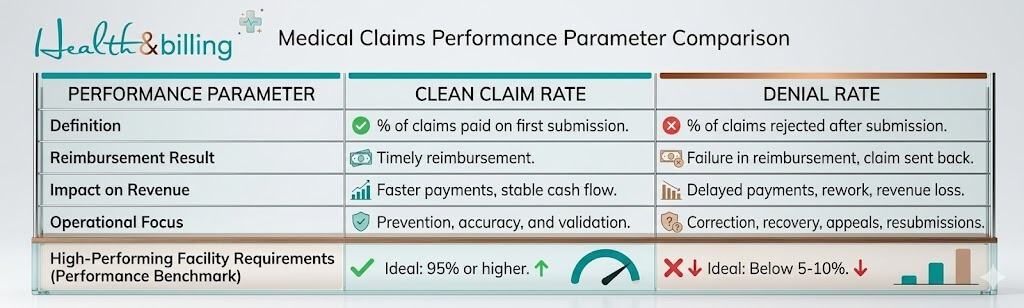
But remember.. at the same time, sticking with an underperforming in-house medical billing team or medical billing services has its own drawbacks. Industry data shows that nearly 12% of medical claims are denied on first submission to the insurance companies. This leads to payment delays, administrative burden, and revenue uncertainty.
Thus, as risky as it sounds, a well-planned medical billing transition is crucial for protecting the revenue of a healthcare facility. Though it all comes down to timing, process, and choosing the right medical billing company as your RCM partner.
Signs It’s Time to Switch Medical Billing Services

Medical billing issues often hide in plain sight until they gradually begin to impact the revenue and operations of a medical practice. The warning signs can be categorized into financial, operational, and compliance roadblocks.
1. Financial Warning Signs
The financial health of a facility is disrupted due to inefficiencies in claim submission by medical billing companies as well as inconsistent follow-up. The signs include:
- Increasing claim denial rates.
- Delayed reimbursements or inconsistent cash flow.
- Lack of transparency in the record and reporting.
- Rising accounts receivable (AR days).
2. Operational Warning Signs
One of the telltale signs that a healthcare facility needs to switch their medical billing company is the operational inefficiency, such as:
- Poor communication or slow response times.
- Frequent billing errors or resubmissions.
- Lack of process standardization.
- Over-reliance on manual workflows.
3. Compliance Warning Signs
Medical billing transition becomes paramount when operational issues start resulting in financial penalties. The compliance warning signs include:
- Incomplete or inaccurate documentation.
- Coding inconsistencies.
- Failure to stay updated with payer policies.
- Increased audit risk.
Benefits of Switching to the Right Medical Billing Company

Successful switching of medical billing companies has a direct effect on the overall performance of a healthcare facility. It is more than fixing money problems. The benefits include:
→ Improved Revenue Cycle Efficiency
As part of their revenue cycle management service, a good outsourced medical billing service company ensures faster claim processing and reduced denials.
→ Better Cash Flow Predictability
Consistent reimbursements become a norm and delays are significantly reduced when a good medical billing service is outsourced.
→ Reduced Administrative Burden
The in-house staff at a medical practice can focus on clinical tasks by spending less time managing issues associated with billing.
→ Enhanced Compliance
A reliable medical billing services provider is well-versed in payer guidelines, proper coding, and documentation.
→ Scalability
A healthcare facility can handle patient volume and increased revenue without needing to expand internal staff or increase operational burden.
Health & Billing is your trusted medical billing services partner. We help healthcare providers streamline revenue cycle operations, reduce administrative burden, and improve financial performance with fully compliant and efficient billing solutions. Contact Now, to discuss your concerns…
The Medical Billing Transition Process: Step-by-Step
If a practice opts to outsource medical billing services, it must approach it in phases rather than a single handoff. This reduces risk and ensures continuity.
Stage 1: Billing Audit and Assessment Before Transition
Before switching medical billing companies, it is critical for a healthcare facility to have knowledge of the current state of its billing operations.
This includes:
- Reviewing denial trends and AR aging.
- Identifying revenue leakage points.
- Evaluating coding accuracy and documentation.
- The step may take a week or two.
Stage 2: Selecting the Right Billing Partner
A healthcare facility should avoid choosing a medical billing company on the basis of its cost alone.
Instead, they must:
- Evaluate expertise in the clinic’s specialty.
- Review reporting transparency and KPIs.
- Assess communication and support structure.
Choosing the right billing partner can solve the issues without losing revenue.
Stage 3: Parallel Billing Phase
Instead of switching abruptly, the current and new medical billing service provider companies work side-by-side for a short period. This part of the medical billing transition process helps minimize disruption and allows for real-time adjustments for both the provider and the billing company.
- Existing billing partner continues current claims.
- New partner begins handling new submissions.
- Processes are tested and refined.
Stage 4: AR Transition & Full Handoff
Once the workflows are stable, two weeks are typically required to:
- Transfer outstanding claims.
- Reassignment of follow-ups and collections.
- Full billing responsibility shifts to the new partner.
Stage 5: Performance Monitoring and Optimization
Even after the handoff, the medical billing transition continues to evolve to ensure the long-term success of the partnership.
In this phase, providers:
- Track KPIs such as denial rates and collection timelines.
- Identify process improvements.
- Ensure consistent communication and reporting.
Though a bit time-consuming, the aforementioned medical billing transition process ensures it goes smoothly without disrupting cash flow.
Common Challenges When Switching Services to a New Medical Billing Company

Even with thorough planning and considerations, challenges can arise when a practice chooses to switch medical billing companies. These include:
→ Temporary Workflow Disruptions
A healthcare facility may experience interruptions in daily billing operations during the transition. Though they are typically short-term and reversible.
→ Data Migration Errors
If the current medical billing service or in-house team fails to transfer complete or accurate data, it can lead to missing information, claim issues, or reporting inconsistencies.
→ Miscommunication Between Teams
Lack of clear coordination between outgoing and incoming billing teams can result in confusion over responsibilities and claim handling.
→ Delays in Claim Processing During Transition
As healthcare providers adjust to the medical billing transition, claims may take longer to submit or process as workflows stabilize, potentially slowing down reimbursements in the short term.
How to Avoid Cash Flow Disruptions During Transition?
Cash flow of a medical practice is often the biggest concern while switching medical billing companies. To make sure the transition occurs without losing revenue, providers should:
- Maintain a parallel billing period.
- Ensure clear ownership of claims during transition.
- Track daily billing activity and submissions.
- Prioritize high-value and aging claims.
- Maintain strong communication between both teams.
Key Considerations for Choosing a Billing Partner
Healthcare providers must consider the following when choosing a medical billing partner:
- Expertise in the required specialty.
- Transparency in reporting and KPIs.
- Technology and automation capabilities.
- Knowledge of compliance.
- Communication and responsiveness.
Questions to Ask Potential Medical Billing Partners…
A good medical billing company acts as an extension of a healthcare practice rather than just a service provider. This is why it is so important to do a thorough evaluation before hiring one.
The following questions can reveal both the capability and the accountability of a billing company.
- How do you handle claim denials and appeals?
- What is your average turnaround time for claims?
- How do you ensure compliance with payer regulations?
- What reporting and performance metrics do you provide?
- How do you manage billing transitions?
How Long Does a Billing Transition Take?
A typical billing transition depends on several factors. However, it may take 6 to 12 weeks in general.
The key factors include:
- Size of the medical practice.
- Volume of claims.
- Complexity of billing processes.
- Data migration requirements.
However, performance stabilization may take up to 3–5 months, especially during optimization phases.
Red Flags to Avoid in a Medical Billing Service

Certain warning signs may be pointing at deeper operational issues within a medical billing company and thus should be avoided for partnership. These include:
- Lack of transparency in reporting.
- No clear KPIs or performance tracking.
- Poor communication or delayed responses.
- Overpromising results without process clarity.
- Limited experience in your specialty.
Outsource Billing to Health & Billing For a Better Revenue!
A seamless billing transition starts with the right partner. With a HIPAA-compliant medical billing company such as Health & Billing, you get structured onboarding, transparent reporting, and expert-led revenue cycle management.
We make sure the switch is smooth, secure, and built for long-term performance.
Book your FREE consultation now!
FAQs
Can changing billing companies affect cash flow?
Yes, medical billing company transition can temporarily affect cash flow of a healthcare practice. However, a structured handover process helps maintain consistent billing and minimize disruptions.
Can my new billing company pursue claims my old company already denied?
Yes, in many cases denied claims can be reviewed and reworked if they are still within the payer’s filing limits and supported by proper documentation.
How long does it take to switch medical billing services?
A medical billing transition typically takes 6–12 weeks, depending on practice size, claim volume, and the complexity of the billing system.